

About The Event
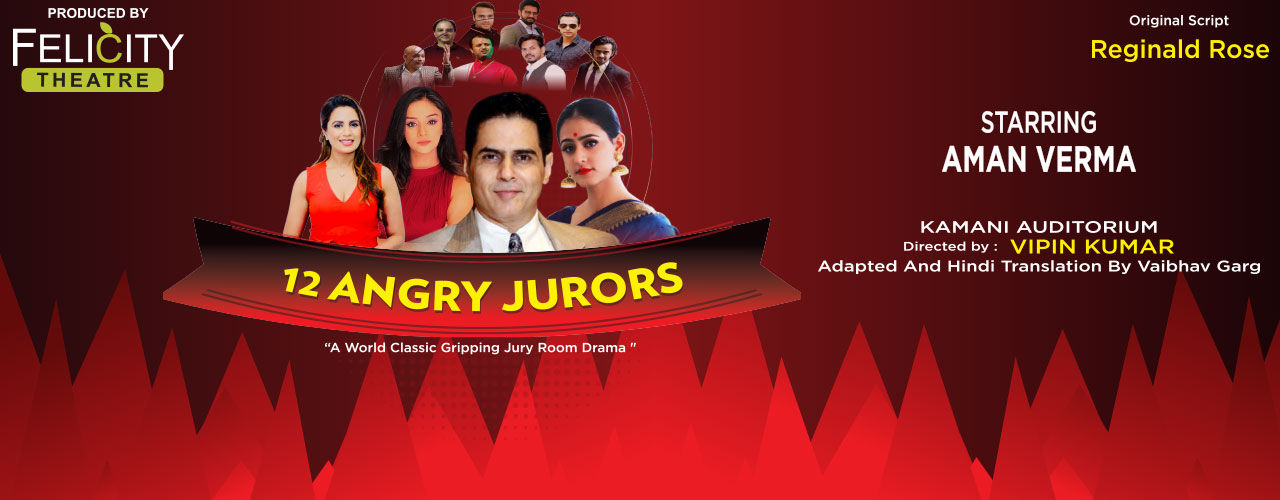
12 Angry Jurors" focuses on a jury's deliberations in a murder case. A 12-members jury is sent to begin deliberations in the first-degree murder trial of a 19- year-old boy accused in the stabbing death of his father, where a guilty verdict means
an automatic death sentence. The case appears to be open-and-shut: The defendant has a weak alibi; a knife he claimed to have lost is found at the murder scene; and several witnesses either heard screaming, saw the killing or the boy fleeing the scene. Eleven of the jurors immediately vote guilty; only Juror No. 8, casts a not guilty vote. At first jury no 8 bases his vote more so for the sake of discussion; after all, the jurors must believe beyond a reasonable doubt that the defendant is guilty. As the deliberations unfold, the story quickly becomes a study of the jurors' complex personalities (which range from wise, bright and empathetic to arrogant, racist, prejudiced and merciless), preconceptions, backgrounds, and interactions. That provides the backdrop to jury no 8 ' attempts in convincing the other jurors that a "not guilty" verdict might be appropriate. The play reveals moral values, The play is also a warning about the fragility of justice and the forces of complacency, of considering the matter fairly and listening to opposing points of view. prejudice, and lack of civic responsibility that would undermine it. Several jurors show that they are virtually incapable of psychological
pressure, critical thinking and the value of life. play raises the question,
Is a jury of ordinary people the best way to reach a correct verdict in a trial? Would a panel of judges or other legal experts be a better way?


