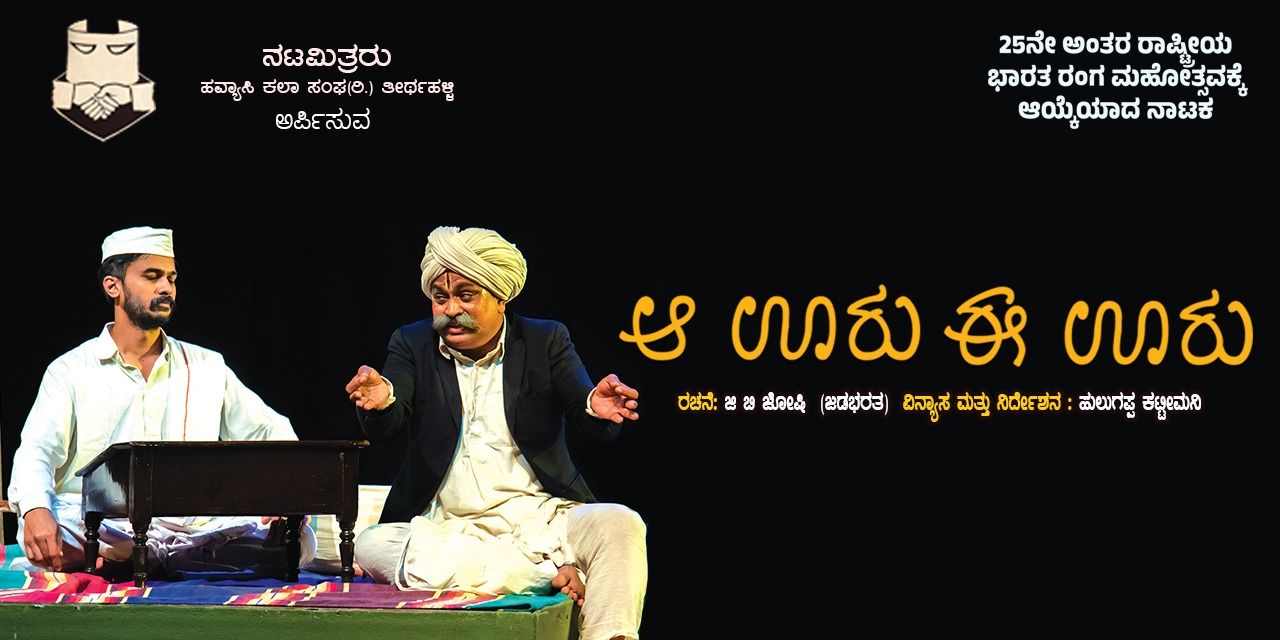


About The Event
Aa Ooru Ee Ooru explores the delicate fabric of family life woven between two Brahmin households from Halalli and Nagarakote. Halalli embodies rural simplicity, while Nagarakote, on the threshold of modernity, depends on it for daily sustenance. Between them flow bonds of kinship, emotion, and social exchange.
At its heart lies Sushila, a woman from Halalli who faces torment in her marital home. Unlike in Padmashri G.B. Joshi’s Mooka Bali, where she endures silently, here she and her husband rise with courage and moral conviction against oppression.
Beneath its domestic setting, the play reflects the timeless struggle between virtue and cruelty, patience and aggression. Through earthy dialect, poetic dialogue, and vivid portraits of everyday life, Aa Ooru Ee Ooru becomes not just a family drama but a mirror to human resilience and the enduring power of quiet strength


