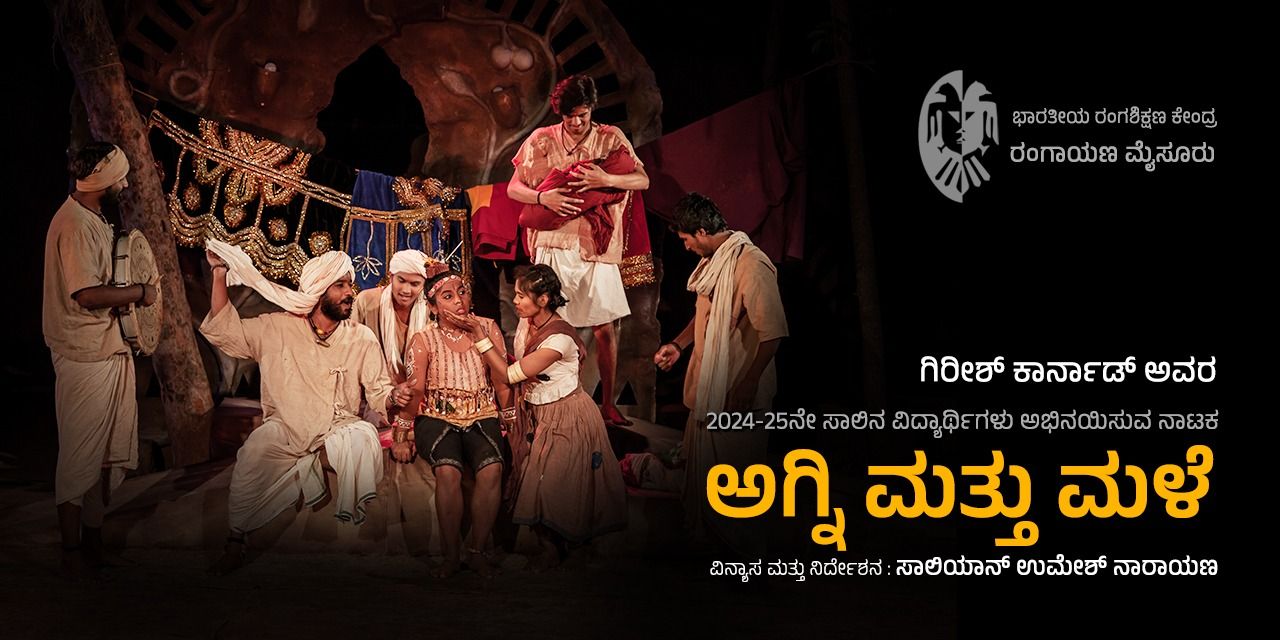


About The Event
The original inspiration for this play, as Girish Karnad himself stated, comes from the `Yavakritopakhyana` found in chapters 135-138 of the Aranya Parva of the Mahabharata. In this story, the sage Lomasha narrates the tale to Yudhishthira, who is in exile. This brief story took 37 years to develop, grow, and unfold within the playwright. The play explores themes such as human virtues, austerity, gender roles, the body, knowledge, hunger, desires, lust, stubbornness, action, renunciation, illusion, the forest, the maiden, life, drought, and death, offering a deep reflection on these concepts for the audience.
The Yavakrit, who went into austerity for penance, is directly seen by Indra, but before his eyes, he sees his lover Vishakha (Fire), whom he had abandoned ten years ago due to his uncle Paravasu`s displeasure. As the Adhvaryu of the Parjanya vow, he practiced strict celibacy for ten years, waiting for rain before the fire of the yajna altar. Meanwhile, his brother Paravasu, amidst the life of the forest and the people, constantly seeks his innocent love, venturing into the forest with the girl Nittile (Rain).
Living a life of compulsion during a drought, fulfilling his responsibilities with his children and daughter-in-law, and enduring the hardships of their chosen life, Appa Raibhya plays a stubborn and determined role.
What do penance and achievement truly mean? The playwright explores this question through the intersection of forest and rural cultures, the union of men and women, and the contrast between philosophical knowledge and spiritual awareness. Through this play, the playwright encourages us to reflect on these concepts. Let us also observe how the literary text has been transformed into a theatrical performance.


