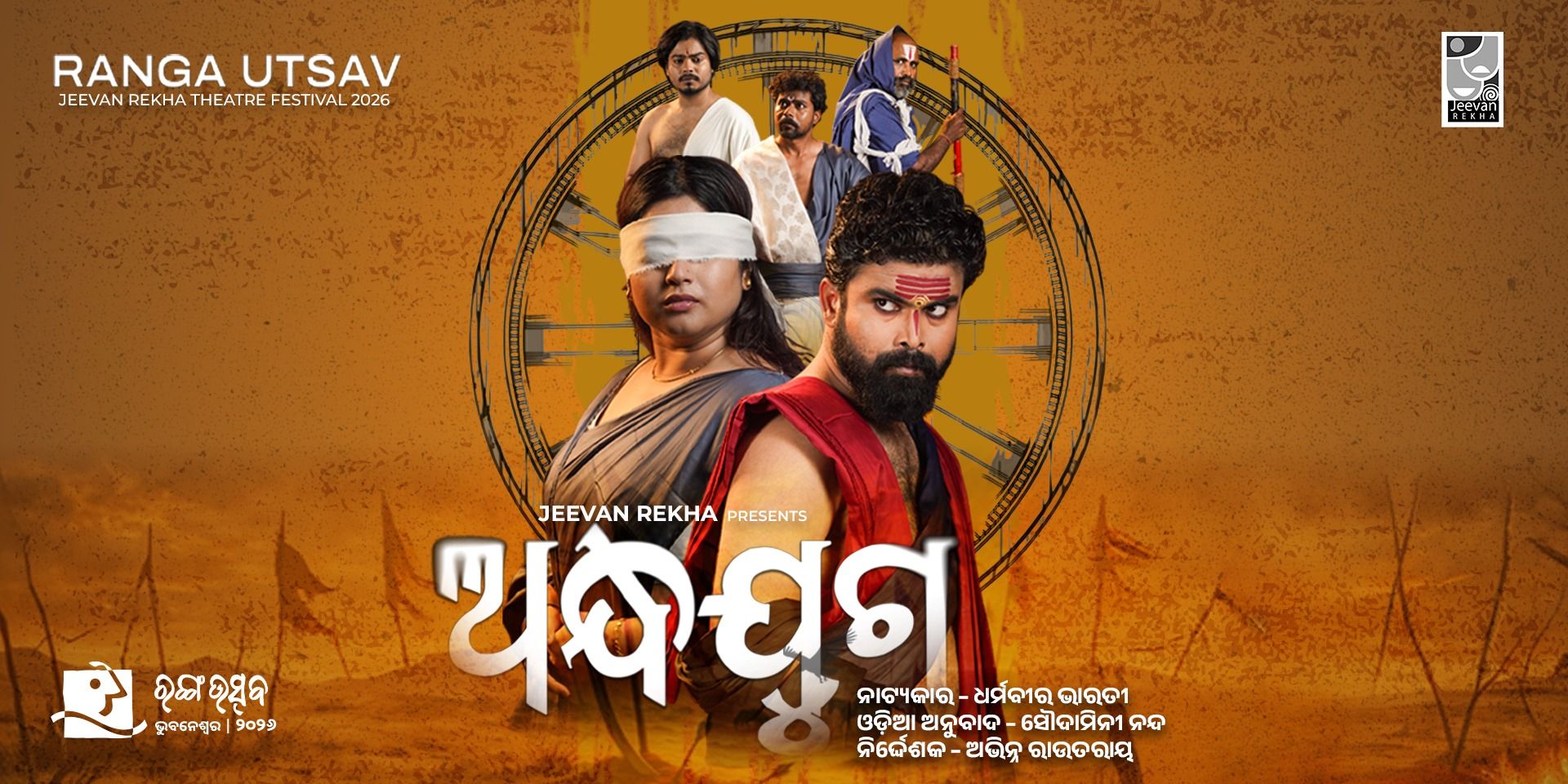


About The Event
Andha Yug is a symbolic play written by Dharamvir Bharati, centered on the last day of the Kurukshetra war in the *Mahabharata*. It reveals the moral decline of human society, violence, blind faith, and inner conflict.
The main focus of the play is Dhritarashtra physically blind, yet his moral blindness has plunged the entire age into darkness. His excessive attachment to his sons compels him to silently support injustice.
After the war, both the victors and the defeated face a terrifying emptiness. Gandhari is devastated by the grief of losing her sons, but her sorrow transforms into a demand for justice. Ashwatthama, driven by defeat and humiliation, kills the innocent and crosses every boundary of human dignity.
In the play, war is presented not merely as a historical event, but as a symbol of the violent and blind tendencies of the human mind. Andha Yug raises the question:
Where intelligence, compassion, and morality are destroyed, what meaning does victory truly hold?
The play ends with a grim truth
Even if the war has formally ended, can it truly be said that the curtain has fallen on war? The dark conflict that continues within the human mind still remains unresolved; when will the curtain finally fall on that?


