

About The Event
ACT Season 16
(February 22-28, 2026)
Various Venues in Delhi/NCR
The 16th edition of ACT – Atelier Campus Theatre Festival marks not just another year of performances but a reaffirmation of what theatre truly stands for: community, collaboration, and collective expression. ACT embraces the spirit of celebration—a celebration of voices, dissent, identities, stories, and the transformative power of coming together.
Atelier’s ACT Festival aka "Atelier’s Campus Theatre" Festival is the World’s Largest Campus Theatre fiesta. Started in 2007, this festival has witnessed more than 800 performances in the last 15 seasons.
In Season 16, we aim to achieve a bigger, better and diverse this year, from February 22-28, 2026.
Festival Curator
Kuljeet Singh
Festival Director
Mansi Grover
Festival Manager
Manjot Singh
Festival Advisor
Gaurav Suri
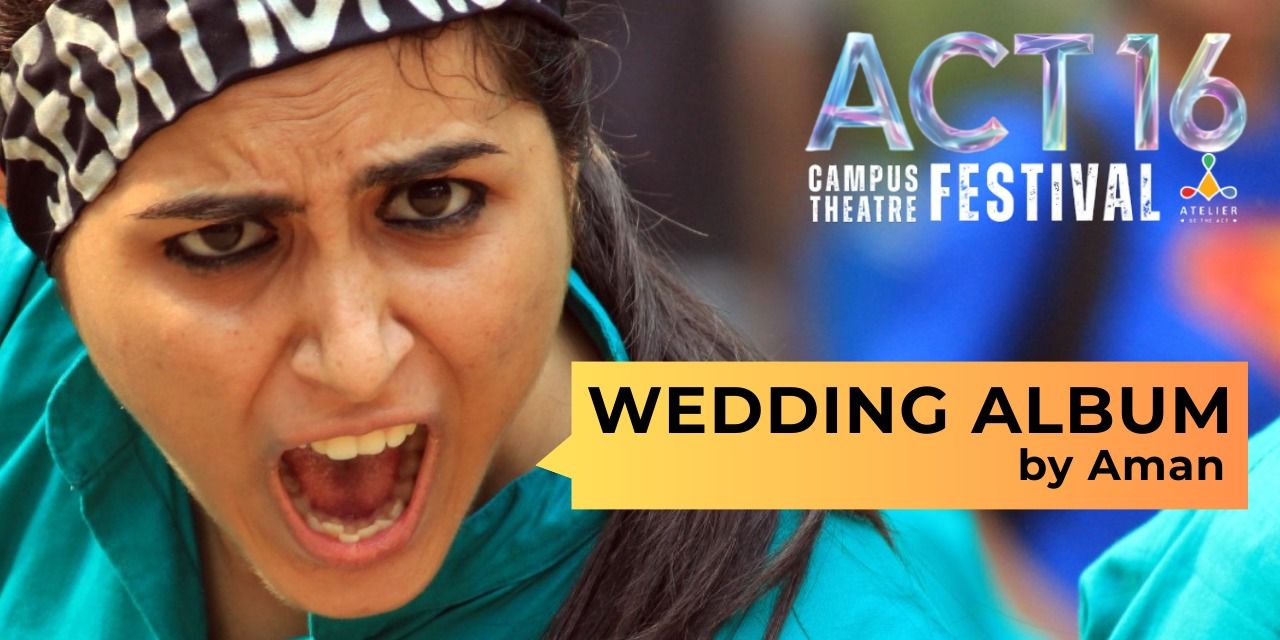
Name of the group: Aman
Name of the college : Zakir Husain Morning College
Synopsis of the play:
This production is an adapted and translated version of "Wedding Album" by Girish Karnad. Wedding Album is set in a middle-class Indian home during the days leading up to a wedding. What appears to be a joyful family occasion slowly reveals tension, silence, and emotional distance among the people living together.The play shows how marriage in society is often treated as a duty rather than a choice. Traditions, social image, and fear of judgment control decisions, while real feelings remain unspoken. Conversations that seem ordinary expose deeper problems—patriarchy, generational gaps, moral hypocrisy, and the pressure to appear “normal” and respectable. Women in the family carry emotional and domestic responsibilities without being heard, while men often avoid accountability. The play also highlights class inequality and the ignored presence of domestic workers inside so-called cultured households. Past trauma and hidden violence quietly resurface, disturbing the comfort of rituals and celebrations.With moments of humour and sudden emotional intensity, Wedding Album questions the idea of the “perfect wedding” and shows how families survive through silence, compromise, and denial. The play invites the audience to look beyond ceremonies and ask what is truly being celebrated.
Trigger warning: Loud music


