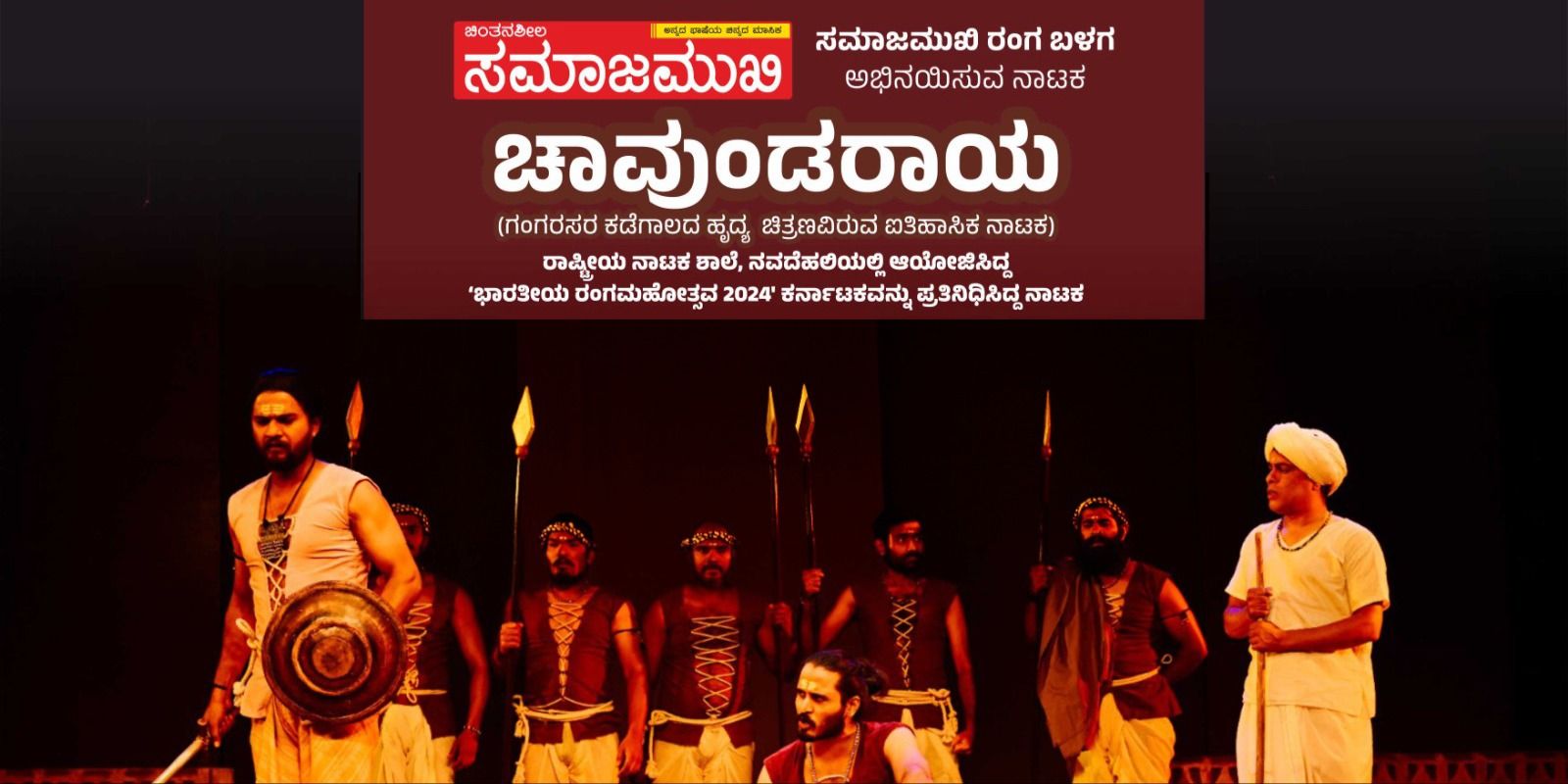


About The Event
The play is set during the reign of the illustrious Ganga dynasty in Karnataka and chronicles the life and achievements of Chavundaraya, the formidable commander-in-chief of the Ganga Empire. The narrative spans from a crucial moment in Ganga history - when the renowned king Marasimha embraces death through Sallekhana (the Jain ritual of voluntary fasting unto death) and his son Rachamalla ascends to the throne - to the historic creation of the colossal Bahubali statue at Shravanabelagola.
The story portrays Chavundaraya as a complex character - a powerful military commander who deeply believes in Jain principles. While fulfilling his duties as the empire`s protector, he remains a devout follower of non-violence, ultimately becoming the driving force behind the creation of the Bahubali statue, a monumental symbol of peace and non-violence. The play also depicts his intellectual pursuits, showing his engagement in poetic discussions with his contemporary, the renowned poet Ranna, while steadfastly defending the Ganga Empire`s throne.
What makes this production particularly compelling is its nuanced exploration of Chavundaraya`s internal conflict - a man torn between his commitment to Jain principles of non-violence and the inevitable violence required in his role as a military commander. The play masterfully reveals this philosophical and moral dilemma, offering a unique perspective on the challenges of balancing religious beliefs with worldly duties.


