

About The Event
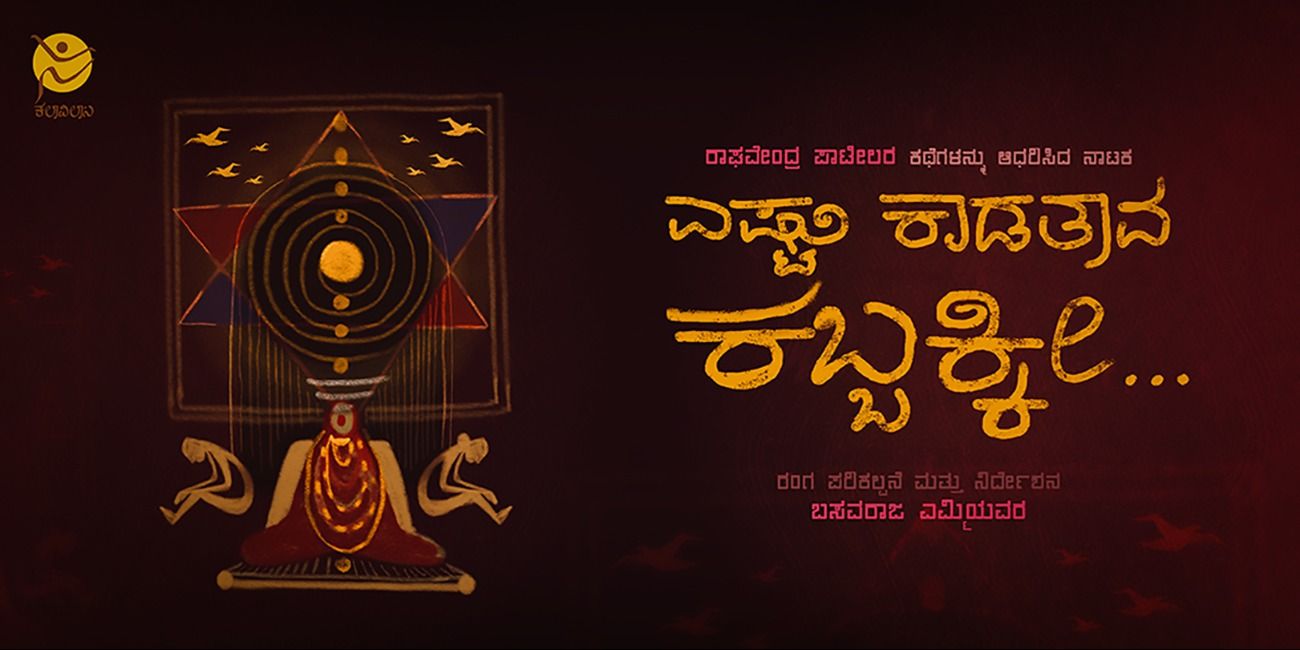
“Eshtu Kādatāva Kabbakkī…” is a dramatic experiment in based on few great stories of renowned Kannada writer Raghavendra Patil. This play seeks to weave the inner turmoil of human beings living within social frameworks.
Patil’s narrative world rests on a distinctive worldview. In the tradition of Kannada storytelling, there are very few works born out of such a minimal idealism yet grounded in the harsh realism of life. Thus, in this play, the diversity, struggles, drama, humour, and many other elements that are naturally found in the soil of real life.
A person can never live truly apart from society, nor can one flee it with one’s back turned. Even if one lives apart, or resists, a part of one always remains tied to it. This play’s principal subject is how all the elements that form the social structure — caste, politics, hierarchical practices, prejudiced traditions, and the corresponding temperaments of human beings — gnaw and devour its own mankind.
Set against the rustic beauty of the rural Belagavi region, the play is shaped by its cultural traditions, fresh humour, the ardour of rural life.


