

About The Event
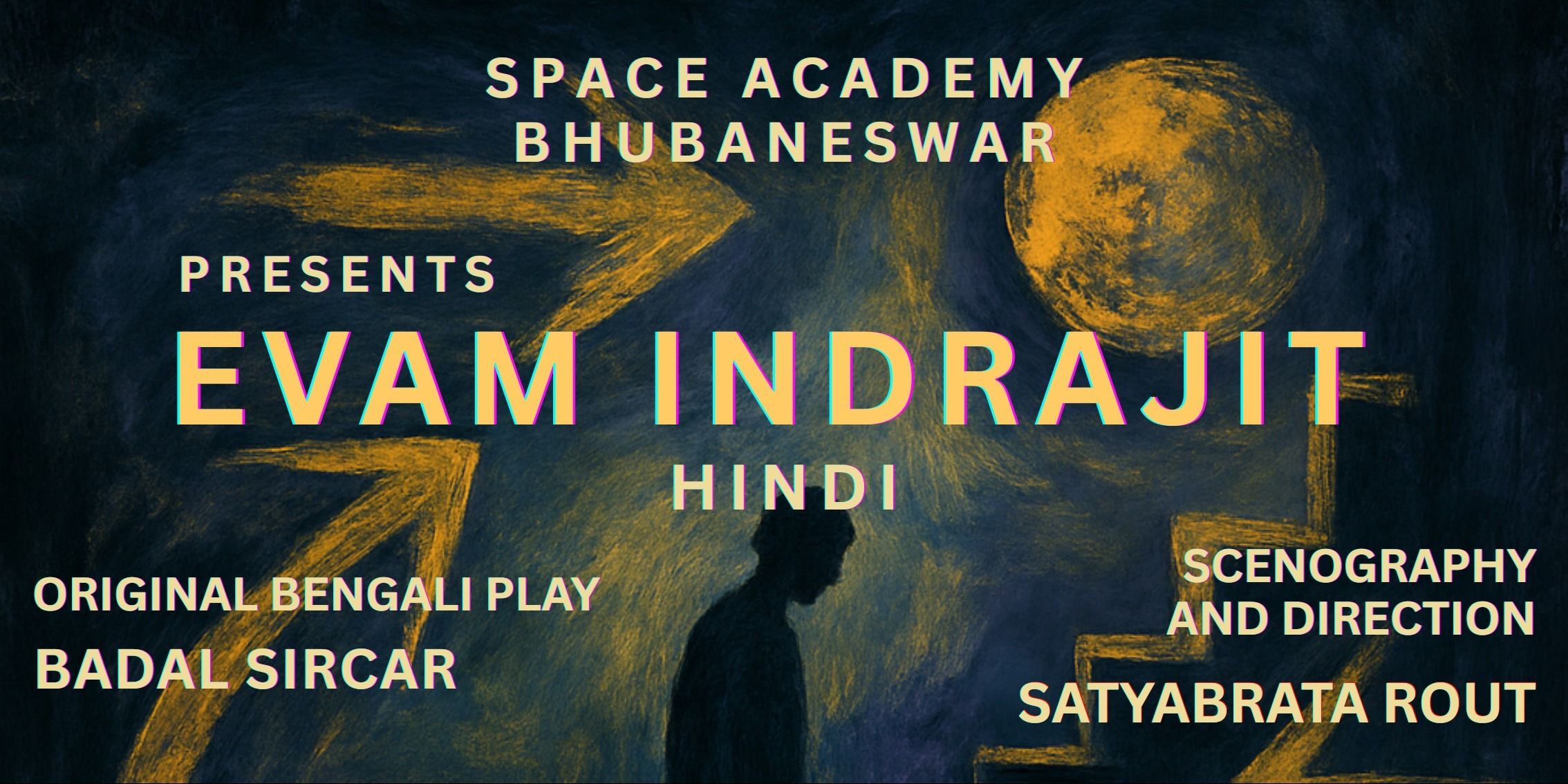
Evam Indrajit (And Indrajit), written by Badal Sircar in 1963, is a landmark play in modern Indian theatre. It explores the existential crisis of the urban middle class and the futility of repetitive, mechanized life. Structured as a meta-theatrical narrative, the play follows a writer struggling to find meaning in the lives of three indistinguishable characters—Amal, Bimal, and Kamal—who represent the average man. Indrajit, the only character who resists conformity, symbolizes the anguished individual in search of identity and purpose. Drawing from absurdist and existentialist traditions, the play challenges linear storytelling and conventional dramaturgy. Its minimalist staging, cyclical structure, and philosophical tone marked a departure from realist theatre in India, influencing generations of theatre practitioners. Evam Indrajitremains a powerful commentary on alienation, modernity, and the burden of being different in a conformist world.


