

About The Event
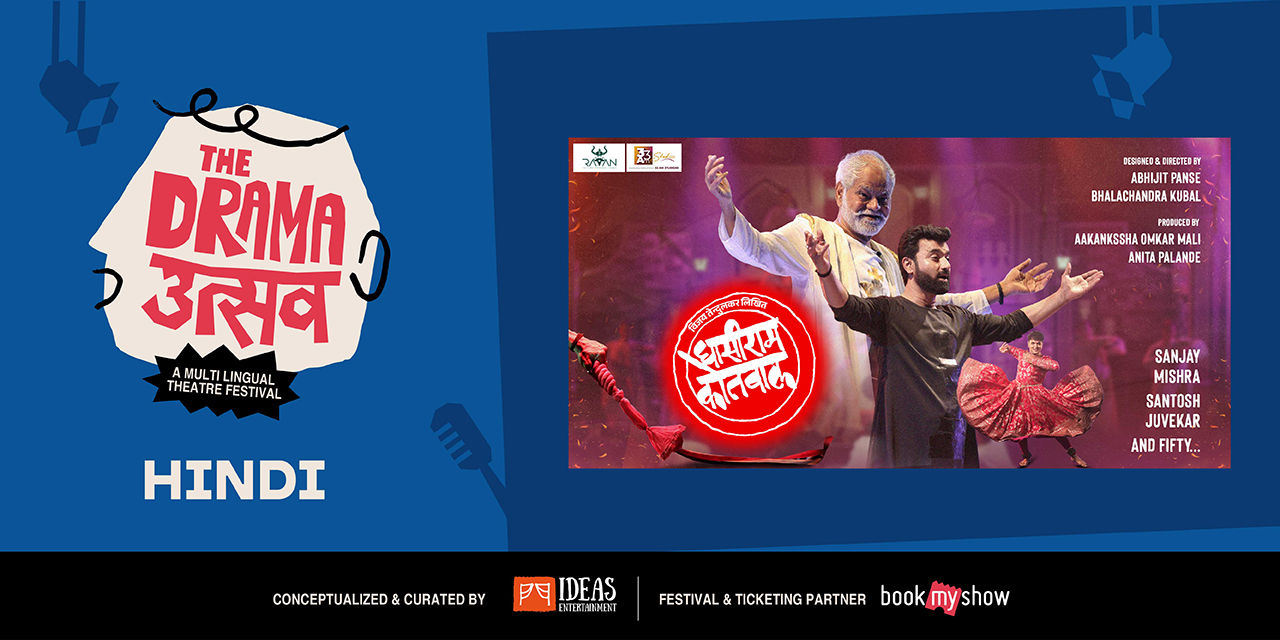
Ghasiram Kotwal by Vijay Tendulkar is a powerful political satire that uses historical context to critique contemporary issues of power, corruption, and social injustice. The play, set in 18th-century Pune under the Peshwa rule, follows the rise and fall of Ghasiram.
The play begins with an invocation to lord Ganesha with a Nandi, which is a traditional way to begin even modern theatrical performances. We are presenting Ghasiram Kotwal in the 2025 era. The Brahmins of Pune introduce themselves, and we can see the morally corrupt situation in Pune. Nana Phadnavis, who is the Diwan (Chief Secretary) of Pune, is also corrupt and visits the lavani dancer. Ghasiram is working with the Lavani dancer. He is impressed by the wit of Ghasiram. Ghasiram, being a Brahmin, goes to collect alms at the Peshwa's festival the next day. However, he is ill-treated there and is charged with pickpocketing and imprisoned for the offence. He then decides to take revenge. So, the play continues to reach the next part of this play.
Ghasiram bargains for his own daughter, Lalitagauri, to get the post of Kotwal (police chief) of Pune from Nana. Having got the post, he begins to enforce strict rules in the city. He starts asking for permits for everything and starts throwing people in jail for the smallest offences. When the commoners come to Nana with a complaint, he dismisses them & is deeply involved with Gauri. In the meantime, Gauri becomes pregnant by Nana and dies during childbirth. Nana asks that her body be thrown in the river in secret. He convinces Ghasiram that the title he enjoys is only because of his patronage. The situation goes out of hand when a few Brahmin visitors to the city are put in jail and die from suffocation due to inadequate ventilation in their custody. The Brahmin of Pune then complains to the Peshwa.
The Peshwa summons Nana, who orders Ghasiram to be killed in the most inhumane way possible. Nana ignores his summons; the Brahmins then surround his palace in protest. To save his skin, Nana finally gives orders for the execution of Ghasiram.
The play explores the themes of violence, both physical and psychological, and the exploitation of women, particularly Ghasiram's daughter, Gori, who is sacrificed for political gain.


