

About The Event
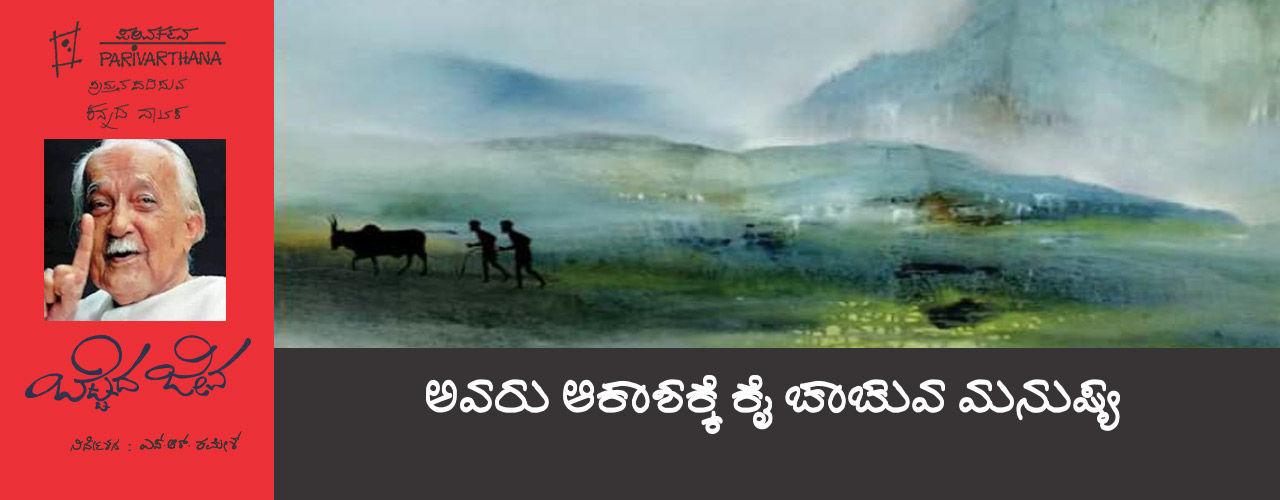
Dr. K.Shivarama karanth's Bettada Jeeva is one of the greatest Noels of Kannada literature. This novel could be compared with KUVEMPU'S Malegalli madumagalu and Raobahaddur"s Gramayana. To understand Karanth is to understand the travesty of Indian civilization post-1857. As karanth points out in one of his writings " I have no thesis to claim in my novels' i write only my experience". The storyline of Bettada jeeva is very simple. It is a story of a Havyaka family who are destined to live in a valley of pristine nature which is surrounded by mountains and impregnable forests. They had two children, the daughter was consumed by fate during her postnatal period, and their only son {shambhu} who was accomplished with English education forsakes his parents and migrates into the neo civilized world in search of green pastures.
The old couple Gopalaiah and Shankari are in endless waiting, waiting for their son to return one day. Nature around them is as still and lonely as these couples are. This 'still world' is occasionally disturbed by the Tiger's roar and the movement of elephant herd Into this land of stillness Shivarama, the narrator of the text enters, His entry is purely accidental, his watch had stopped showing time and he had lost his way,later he was guided to Gopalaiah's house by drunkard Deranna. Like a fou legged monkey, shivarama crosses the bridge and glides into the house of Gopalaiah. The story unfolds in the conversations of Gopalaiah, shankari and shivarama. Gopalaiah tells him about his ancestor's migration into kelabailu, his marriage with shankari, the way he spiritedly cultivated his byzantium- Kaatumoole, his failure in Kabbbina hittalu, Influenced by his clannish people, he also sends his to English school, only to lose him later. Shankari cries on shivarama's shoulder about her longings for his son, she cried before shivarama to let her see her son at least once. The fear of apprehension of losing her son in her twilight age is bothering her very much. Karanth employs Migration as leitmotif in the text.Many people either migrate into kelabailu or migrate from kelabailu, Gopalaiah' ancestors migrated into kelabailu village, shankari came from vitla region, Narayana, a nomadic who was wandering aimlessly was brought into kaatumoole.
The only aborigine in this landscape is Bhatya. And it is Shambhu who migrated from this stoic, unchanging world into a new world which heralds change and new hope..Interestingly, these people who live amidst mountains fail to understand the reasons behind shambhu's departure. They think it is the compounding effect of English education Karanth is looking at migration from different perspectives sometimes it is migration, sometimes it is exploration, sometimes it could be exhibition of adventure or search of new culture or it could be due to financial necessity. In this novel, karanth juxtaposes neo-modern civilization with an unravished rustic society. The juxtaposition is not in conflicting terms but it is before this urban suave world, the rustic society unravels its moments of success and failures... Life spans into the mountain would once shivarama enters, he catalyzes the process of change, the roaring Tiger is killed, the prolonged delay in conducting the kola festival finds its decisive omen, finally the anxiety of Narayana is resolved, Katumoole shall be given to Narayana and finally, the lost son located. Thus the story is about the anthropological experience of human beings, his relationship with nature, the way he conquers nature, his failure at times.
In essence, karanth has woven something which reflects human society’s experience. Another important theme of the story is the presence of Gandhian thoughts. Of course it is very tangential in the novel but in the production text we have created a space for Gandhian presence, The proceedings of the novel take place somewhere during 1941 and that was time Gandhi visited South Canara, (Dakshina Kannada) villages, In his Speeches he deeply rejoices the kind-hearted Kannadigas, while he traveled through the villages like sampaje, putturu, soolya and other places he speaks on equality, untouchability, as a social sin. He advocates principles of nonviolence, He praises the sacrifices made by kudamal rangarao, and in the production text we have assimilated these elements


