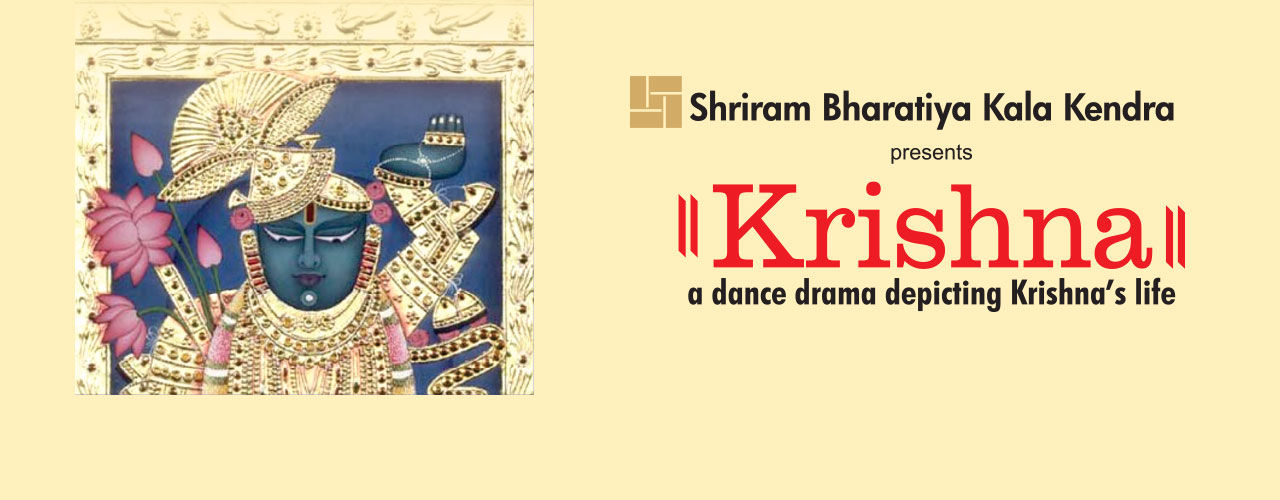


About The Event
Krishna’s fascinating personality has been later overlaid with legends, myths, miracles, and adoration. Wise and valorous, he was loving and loved, farseeing and yet living for the moment, gifted with sage-like detachment and yet intensely human, the diplomat, the sage and the man of action with personality as luminous as that of a Divine.
The first half of the production is devoted to the populist episodes i.e. Makhan Chori, Govardhan, Kaliya Raas, etc. In this production, ‘Krishna’ himself elevates the status of ‘Radha’ from her being just a beloved to that of her being “His Divine Consort”. The story of Yadavas gets linked up with the story of Krishna Vasudeva, whose end is sought by his uncle Kamsa but whose end; he manages. A fierce struggle with Jaraasandha of Magadha forces Krishna and the Yadavas to leave Mathura and migrate to Dwarka.
However, in the Mahabharata, it is the message of ‘Gita' which is pivotal. Vyas, the author, here makes profundity of Krishna the charioteer and Arjun the rider; subtly allegorizing the same for the mind and body.
In Mahabharata, why man isolates himself and sets himself against his brethren has to be grasped in the expanse of esoterism. Violence is deeply embedded in the plot, yet it is the manner of securing harmony in bloodless ways that is significant. The solutions to the carnage are offered on the same battlefield. The Kurukshetra war continues through epochs to our very own times and the message of victory and redemption is more pertinent today than ever before.


