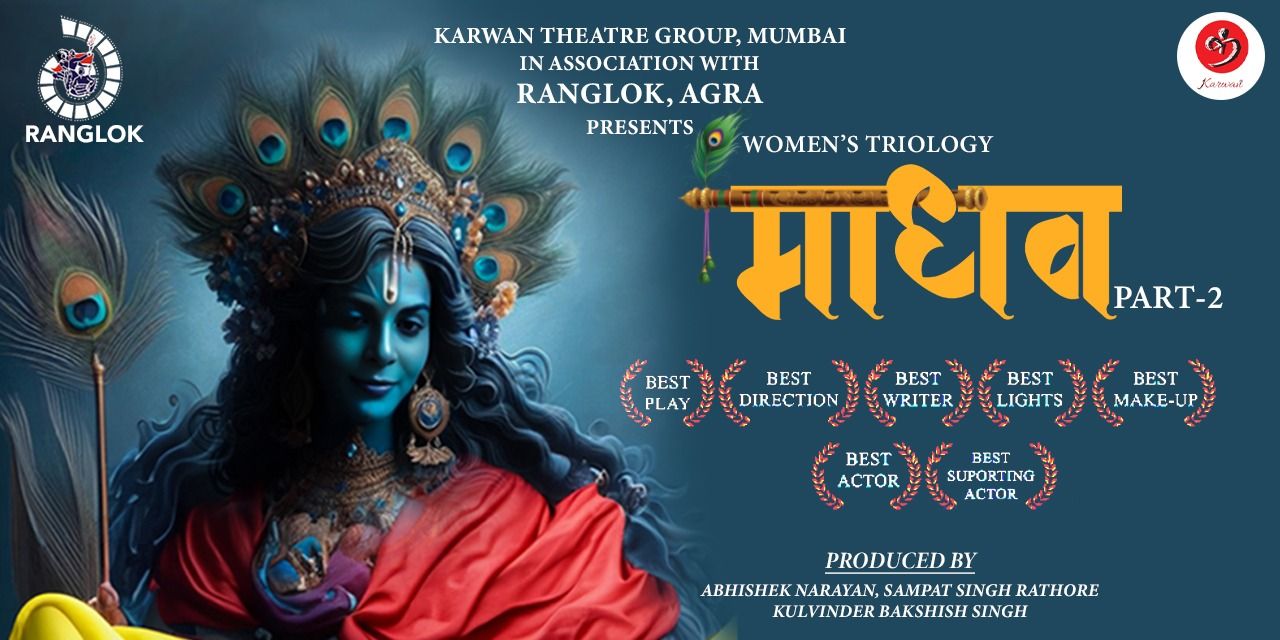


About The Event
After the tyrannical ruler of Mathura, Kansa, was killed,
his father-in-law, Jarasandha, began attacking Mathura repeatedly. To protect the city
from these assaults, Madhav (Krishna) made a practical decision to relocate to
Saurashtra and establish a new city, Dwarka.Childhood memories often took him back
to the lanes and forests of Gokul and Vrindavan. Along with these sweet memories
were also the recollections of Kansa`s numerous attempts to kill him and how he
thwarted them.Radha, the epitome of his first eternal and transcendental love, and
the grand celebration of Maha Raas with the gopis (cowherd maidens).
The spark of rebellion and revolution began with the worship of Govardhan Hill,
where Krishna openly challenged the tyrannical king. By accepting Kansa`s deceptive
invitation, he killed Kansa and restored Mathura to its former republican state, all
while continuing his education with Sandipani.
While living in Dwarka, Madhav, who had transformed from the flute-playing Murli
Manohar to the wielder of the Sudarshan Chakra, helped his cousins, the Pandavas,
reclaim their ancestral kingdom. With the help of the Pandavas, he destroyed his
formidable enemy, Jarasandha.
When the Pandavas were deceived by the Kauravas, Krishna stood firmly by their side
and ensured the establishment of righteousness in the decisive battle of Mahabharata,
leading the Pandavas to victory.
Designed with meticulous intricacy, the play enshrines its essence through the
portrayal of multiple characters by four female actors, augmented by the infusion of
indigenous folk arts such as Mayurbhanj Chau, Manipur martial arts, Thang-Ta, and
the ancient Indian martial art of Kalaripayattu.


