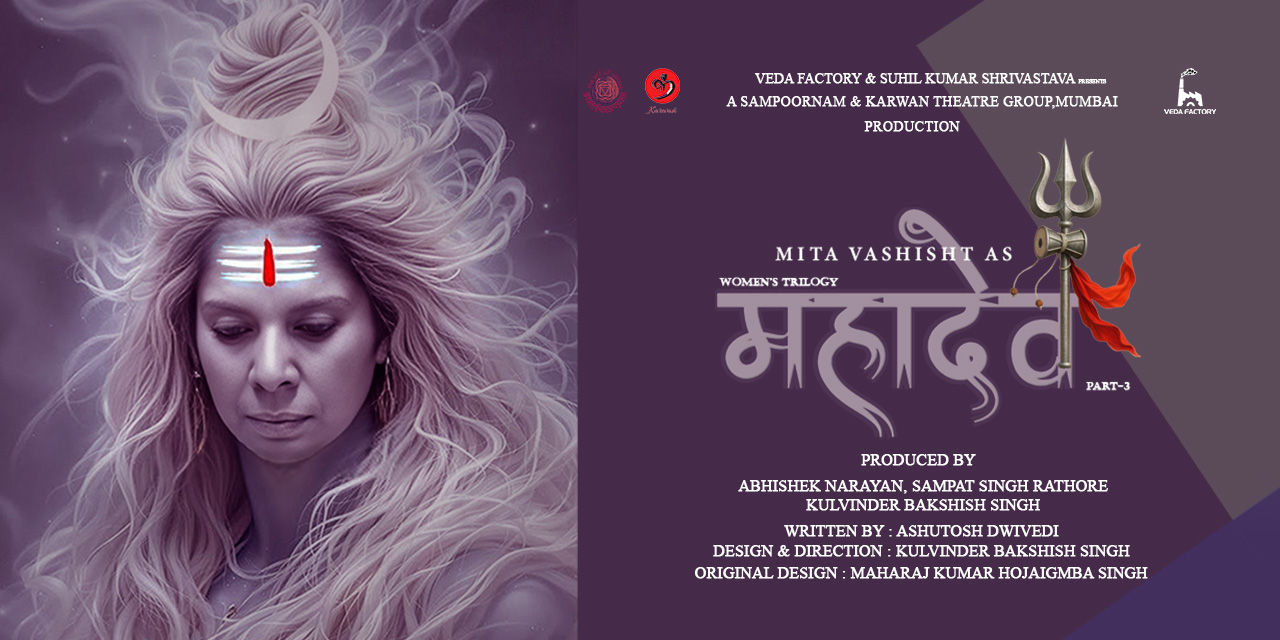


About The Event
In the narratives of Mahadev—the eternal guardian of nature—there is a clear message: closeness to the natural world and distance from artificiality. Worshipped in both nirguna (formless) and saguna (with form) aspects, Mahadev’s Sadashiva form strengthens every philosophy of thought and spirituality. With infinite expanse, manifesting as the luminous, fiery Lingam, Mahadev’s divine drama begins in the form of Rudra—resolving the conflict born of ego and supremacy between Brahma and Vishnu.
Mahadev offers a rational path to liberation from human fears, greed, material obsession, and desire. He places Shakti—the feminine principle—at the highest pedestal. His reverence for feminine power is clearly reflected in the episodes of Shatarupa, Sati, Uma, Kali, and the descent of the Ganga. When Brahma became infatuated with his own daughter, Shatarupa, Mahadev severed Brahma’s fifth head as a stern warning to remain within the bounds of moral order.
Though Mahadev resided atop the supreme peak of Kailash and was reluctant to marry, Brahma arranged Sati’s marriage to him under specific conditions. Yet the arrogance of Daksha, Sati’s father, led to her self-immolation—an act that unleashed Mahadev’s immense grief and wrath, causing great destruction. Once again, Shakti won over Shiva through devoted and surrendered love, leading to his marriage to the daughter of Himavan, where he arrived with a most unconventional wedding procession. He is both a householder and a supreme yogi; a protector and a destroyer; the ever-compassionate Ashutosh, who is pleased in an instant. This theatrical presentation portrays the unique and infinite expanse of Sadashiva through a perspective attuned to the modern world.


