

About The Event
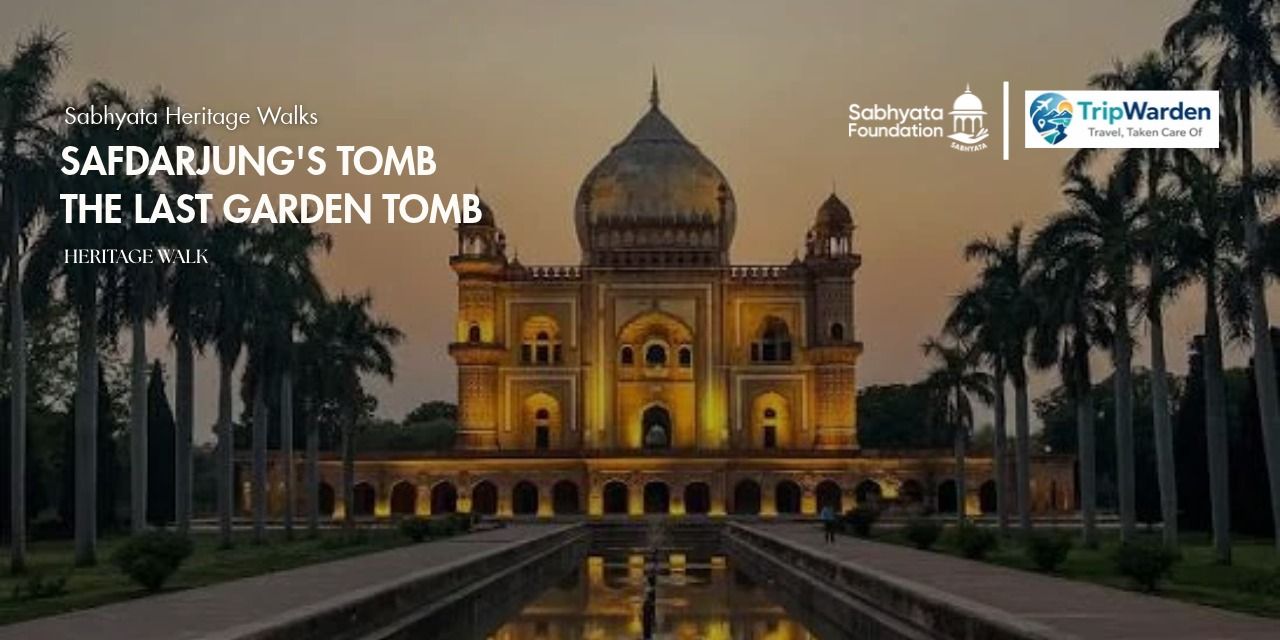
Standing quietly amidst the changing landscape of modern Delhi, Safdarjung Tomb represents the final great expression of the Mughal garden tomb tradition. Built in the eighteenth century for Safdarjung, a powerful nobleman and statesman during the later years of the Mughal Empire, the monument reflects both the enduring influence of Mughal architectural ideals and the changing realities of a declining empire.
This walk explores Safdarjung Tomb beyond its imposing central structure, uncovering the carefully planned landscape and lesser-known architectural spaces that together form this remarkable funerary complex. Participants examine the tomb's design and its relationship with the earlier Mughal garden-tomb tradition while exploring the mosque, elegant pavilions and arcaded structures within the complex.
Through its gardens, water channels, architectural spaces and changing historical context, the walk traces the final chapter of one of India most important architectural traditions and asks what happens when an imperial style continues to survive even as the world that created it begins to disappear."
walk theme & Highlights:
"The last great Mughal garden tomb
Late Mughal architecture
Safdarjung and eighteenth-century Delhi
Evolution and decline of the garden-tomb tradition
Mughal funerary architecture
Mosque and religious architecture
Badshah Pasand
Moti Mahal
Arcaded pavilions
Gardens and water channels"
Detailed Itinerary & Flow of the Walk:
"- Introduction to Safdarjung's Tomb and its place in the final phase of Mughal architecture and eighteenth-century Delhi.
- Explore the history and architecture of Safdarjung's Tomb while understanding the story of Safdarjung and the political landscape of the declining Mughal Empire.
- Examine the design of the central tomb and discuss its connection with the earlier Mughal garden-tomb tradition.
- Explore the mosque and understand its architectural details and role within the larger funerary complex.
- Visit Badshah Pasand and Moti Mahal, uncovering the lesser-known structures and stories associated with the complex.
- Walk through the graceful arcaded pavilions and examine architectural details that are often overlooked during a regular visit.
- Explore the carefully planned garden, pathways and water channels and understand their importance within the traditional Mughal concept of the garden tomb.
- Discuss how Safdarjung's Tomb represents both the continuation of a great architectural tradition and the changing political and cultural realities of late Mughal Delhi.
- Conclude with a reflection on why this monument is remembered as the last great garden tomb of the Mughal era."
Important Information:
1) Please carry a valid photo ID and your confirmed e-ticket for entry.
2) Kindly arrive 30 minutes before the scheduled start time of the heritage walk.
3) Monument entry tickets are not included in the heritage walk fee and must be purchased separately by participants either via ASI website or at the ticket counter.
4) The registration fee covers only the heritage walk (guided tour).
5) Outside food and beverages are not permitted within the monument premises.
6) Tickets are non-refundable and non-transferable, except in the event of cancellation by the organizer.


