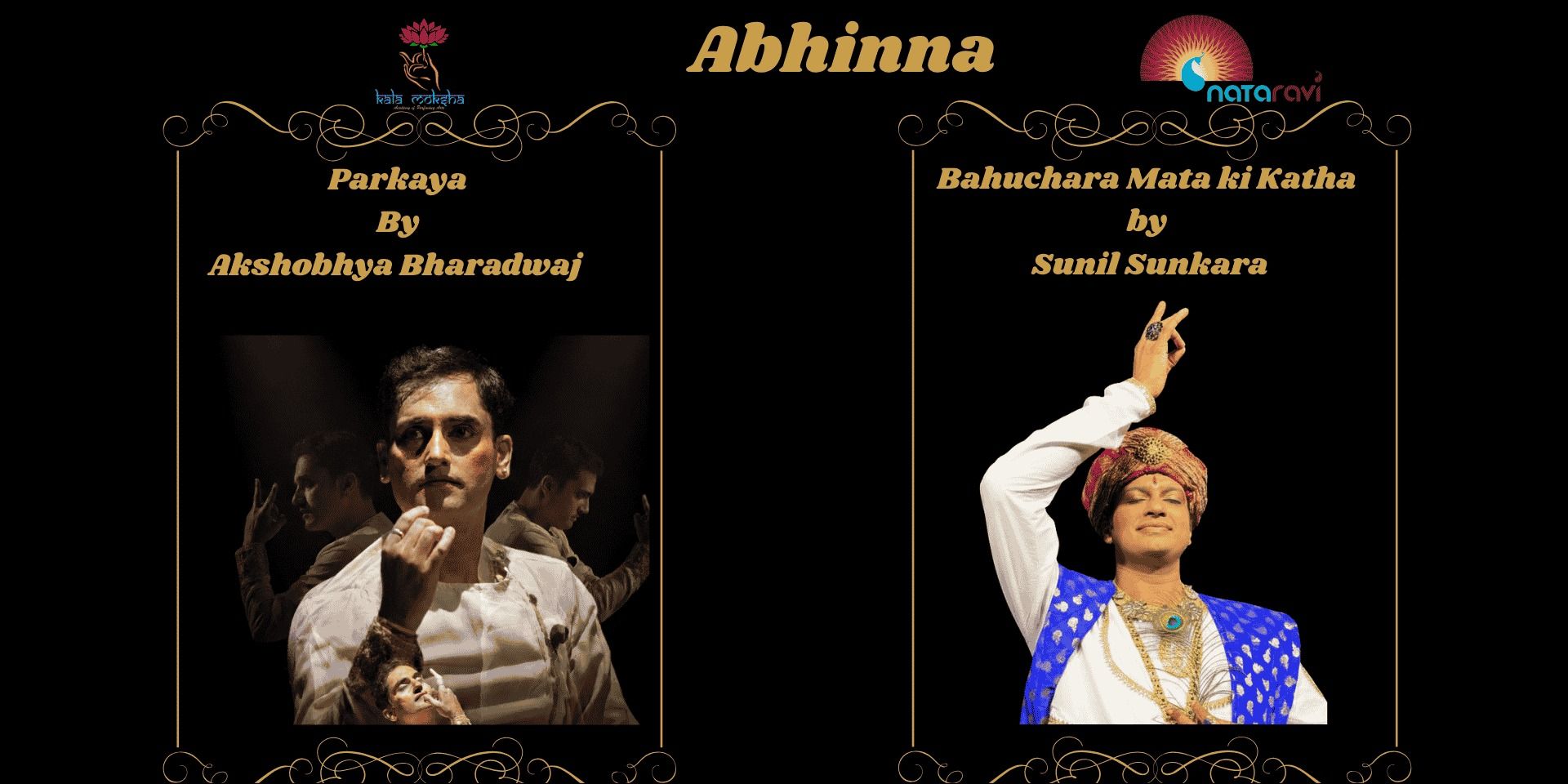


About The Event
An artistic production of this depth bridging the visceral reality of human experience with the heights of classical mastery deserves a comprehensive multi dimensional exploration Below is an exhaustive deeply detailed master monograph and audience guide designed to immerse the reader into the philosophy dramaturgy technical grammar and spiritual landscape of Parkaya and the artistry of Akshobhya Bharadwaj and Sunil Sunkara
Part 1 The Philosophy of Transcendence in Classical Dance
The Body as a Vessel
In the Indian artistic tradition the physical form is never viewed merely as an instrument for aesthetic display Instead it functions as a sacred temple a microcosm of the universe and a bridge between the material world Samsara and ultimate liberation Moksha Classical Indian dance particularly Kathak utilizes the physical anatomy to manifest metaphysical realities When a dancer steps onto the performance space the biological body begins to dissolve giving way to an altered state of consciousness where the boundaries between the self and the divine blur
This concept of the body as a fluid vessel is central to understanding the evolution of performance art The dancers torso limbs and facial expressions become tools to channel energies that transcend their own personal identity gender and social conditioning Through rigorous training and internal realization the performer learns to empty the self allowing universal truths emotional archetypes and spiritual narratives to flow unhindered through their movement
The Dissolution of Gender Binaries
For centuries classical dance has provided a unique cultural space where rigid societal definitions of masculinity and femininity are challenged and dismantled Within the framework of ancient Indian philosophy existence is seen as a harmonious interplay of two primordial forces Shiva the masculine static consciousness and Shakti the feminine dynamic cosmic energy These forces do not exist in isolation they reside simultaneously within every individual regardless of biological sex
In the performance idiom this duality is expressed through the concepts of Tandava vigorous robust and structurally powerful movement and Lasya graceful fluid and emotionally expressive movement A master dancer does not belong exclusively to one domain The ultimate achievement in dance is the seamless synthesis of both energies reflecting the concept of Ardhanarishvara the composite androgynous form of the divine By moving fluidly between these expressions the performer demonstrates that gender is not a fixed prison but a spectrum of cosmic play Lila
Part 2 Act 1 Parkaya The Masculine Shell and the Feminine Flame
Introducing Akshobhya Bharadwaj
Act 1 brings to life the visionary performance of Akshobhya Bharadwaj an international level artist whose work has graced prestigious global platforms As an ICCR empanelled artist Akshobhya Bharadwaj represents the finest caliber of cultural ambassadorship carrying the profound heritage of classical dance across international borders His artistic brilliance is matched by rigorous intellectual pursuit as a PHD scholar allowing him to ground complex performance choices in deep historical textual and philosophical research Through Parkaya he translates scholarly depth into an unforgettable transformative theatrical experience
The Concept of Parkaya Pravesh
The term Parkaya draws inspiration from the ancient esoteric yogic science of Parkaya Pravesh the mystical act of transmigrating ones consciousness into another physical body or form In a theatrical context this concept undergoes a profound metaphorical transformation It represents the ultimate psychological and spiritual empathy where an individual transcends the boundaries of their own physical casing to inhabit feel and express a completely different mode of existence
In this production Parkaya signifies the journey of a consciousness trapped within a masculine exterior seeking to experience and manifest the deepest most sacred dimensions of the feminine experience It is not a superficial impersonation or a simple theatrical cross dressing it is an agonizing ecstatic and complete internal transmutation where the masculine shell cracks open to release a dormant roaring feminine flame
The Narrative Arc From Torment to Awakening
The narrative progression of Parkaya is structured as an intense psychological and somatic journey moving from deep existential friction to ultimate liberation
Isolating Society Nocturnal Visions Somatic Labor Spiritual Awakening
The Isolation and the Social Gaze
The performance opens in a state of stark containment The protagonist is trapped within the rigid expectations of a patriarchal society that demands absolute conformity to traditional masculine norms The choreography here is sharp geometric and restrictive reflecting the invisible walls built by the social gaze The individual carries an unvoiced internal weight a profound longing that society deems impossible unnatural or taboo
The Nocturnal Visions and Internal Rupture
As the outer world recedes into the night the conscious mind relaxes its guard and the subconscious takes over The performance transitions into a surreal dreamscape Here the protagonist is visited by powerful recurring nocturnal visions These visions are not gentle they are visceral overwhelming visitations of a maternal consciousness The dancers movements become fragmented erratic and charged with a desperate intensity as they grapple with an internal presence that demands to be acknowledged
The Visceral Pain of Somatic Labor
The emotional climax of the act brings the audience face to face with an extraordinary thematic choice a biological man experiencing the physical and emotional reality of labor The choreography during this segment strips away standard decorative dance elements replacing them with raw heavy and grounded movements that mimic the contractions the breathless agony and the profound vulnerability of childbirth The pain depicted is multi layered it is the physical memory of creation the emotional trauma of societal suppression and the existential labor of giving birth to ones true spiritual self
The Metaphysical Birth and Spiritual Awakening
Out of the crucible of pain comes transformation The heavy agonizing movements gradually give way to a sense of weightlessness and expansive grace The masculine shell does not disappear rather it finds complete peace with the feminine flame inside The act of birth is realized not as a physical product but as a metaphysical awakening The dancer achieves a state of stillness and pure vibration where movement slows down into dynamic meditation leaving the audience in a state of quiet awe
Technical and Aesthetic Innovation
Parkaya challenges and expands the traditional presentation of classical Kathak introducing innovative staging techniques to heighten the dramatic impact of its narrative
Scenography and Light Design
The production completely discards traditional static physical sets opting instead for a highly minimalist and dynamic scenographic approach The stage becomes an empty canvas of light and shadow
Chiaroscuro Effects High contrast light design is used to create sharp divisions on the stage symbolizing the split between the protagonists outer reality and inner world
Shadow Play Real time projection of shadows is employed to magnify the dancers movements creating a visual metaphor of a larger cosmic feminine form moving behind or within the physical male body
An artistic production of this depth bridging the visceral reality of human experience with the heights of classical mastery deserves a comprehensive multi dimensional exploration Below is an exhaustive deeply detailed master monograph and audience guide designed to immerse the reader into the philosophy dramaturgy technical grammar and spiritual landscape of Parkaya and the artistry of Akshobhya Bharadwaj and Sunil Sunkara
The Acoustic Score
The auditory landscape of Parkaya is designed to be an immersive visceral experience that guides the emotional responses of the audience Moving away from purely decorative melodic loops the score features
Live Indian Instrumentation A carefully curated ensemble featuring the Sarangi to capture the weeping yearning quality of the soul the Tabla and Pakhawaj to provide the heavy primordial pulse of labor and a classical vocalist whose improvisations mirror the shifting emotional states of the protagonist
Somatic Sounds Integrated into the live music are deliberate acoustic pauses filled only with the sound of the dancers breath the sharp striking of feet on the floor and the heavy resonance of ghungroos dancing bells grounding the spiritual narrative in a profound physical reality
Breaking the Fourth Wall Kathavachan and Interaction
Rooted in the ancient origin of Kathak where traveling storytellers Kathakars communicated directly with village communities Parkaya revitalizes the art of Kathavachan At strategic junctures in the performance the music drops away and the performer addresses the audience directly through spoken word poetry and philosophical inquiry By breaking the fourth wall the production strips away the detachment of modern theater transforming the audience from passive observers into active witnesses and co travelers in this deep spiritual inquiry
Part 3 Act 2 The Scholar Artiste Sunil Sunkara and Bahuchara Mata
The Synthesis of Art and Academics
The second half of the evening brings a shift in focus highlighting the classical precision rigorous research and spiritual devotion embodied by Sunil Sunkara Sunil represents a rare breed of modern classical dancers who bridge the gap between academic scholarship and elite performance execution
His background as the Dance Academic Head at the World Forum for Art and Culture WFAC ensures that every gesture every rhythmic cycle and every narrative choice is backed by deep historical and textual understanding His artistry demonstrates that true classical dance is not merely an intuitive emotional outburst but a highly intellectual structured discipline that requires a deep knowledge of literature
 Intimate Experience
 Venue Vibe


