

About The Event
5.00 pm to 5.45 pm
Panel Discussion by experts in the field of tribal languages from Jharkhand invited by Tata Steel Foundation
Topic: Looking at Jharkhand through the Lens of Tribal Languages
Panellists – Dr. Ajit Munda (Munda Tribe), Sadhna Samad (Ho Tribe), Dr. Narayan Oraon (Oraon Tribe), Rabindranath Murmu (Santhal Tribe)
Moderator - Gunjal Ikir Munda (Academician and Social influencer)
Entry free on first-come-first-served basis
6.30 pm
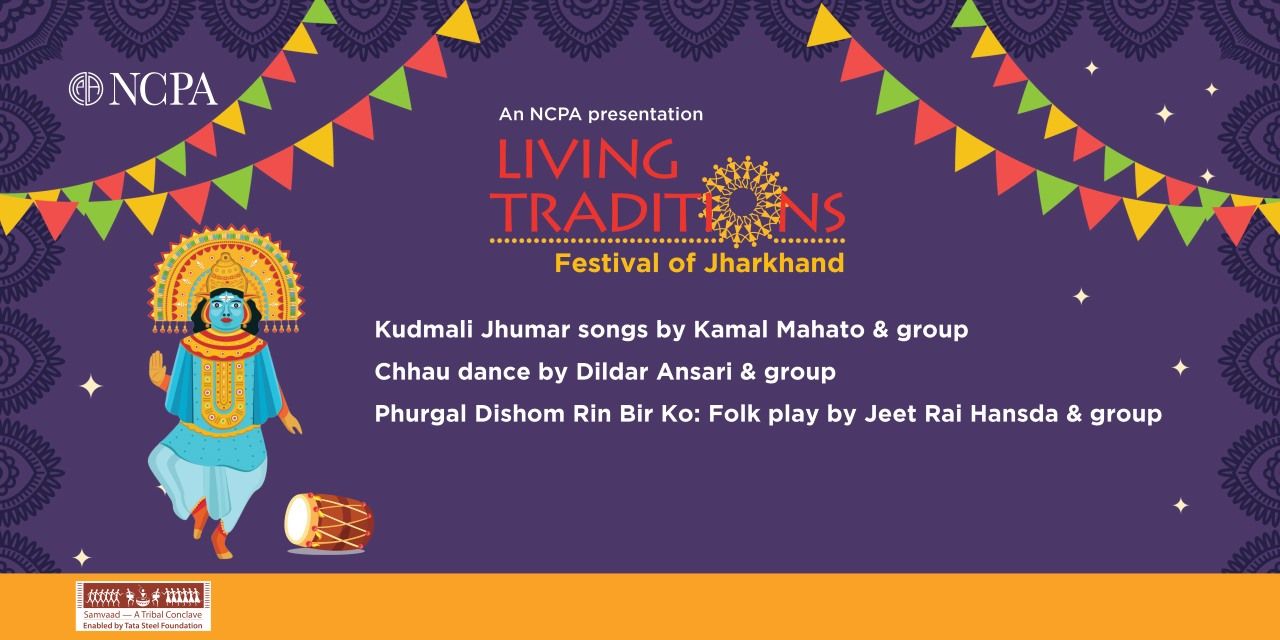
Kudmali Jhumar songs by Kamal Mahato & group
Regarded as an Indo-Aryan language, Kudmali is one of the several languages spoken in Bihar. While mainly prevalent in the Chhota Nagpur region of Jharkhand, it is also widespread in the border regions of Orissa and West Bengal. Though mainly written in Bangla script, Kudmali literature is also available in other languages such as Devnagri and Odiya.
Closely linked with the lives of common people, Kudmali folk songs are simple, yet appealing. There is no aspect of life in this region that can be considered complete without the inclusion of these extremely popular songs, known as Kudmali jhumar geet.
Chhau dance by Dildar Ansari & group
Recognised by the UNESCO as the intangible cultural heritage of the humanity, chhau is a popular dance form prevalent in the three states of eastern India: Jharkhand, Odisha and West Bengal. Although there are regional variations, generally, topics range from the great epics to mythology, nature, and even folklore, that are presented using combinations of hand, neck and eye movements. Some varieties also deploy martial arts techniques. Instruments used are: bamboo flute, cymbals and varieties of native drums. Within the state of Jharkhand, there are three prevalent styles of chhau: Saraikela, Kharsawa and Manbhum.
This chhau dance presentation revolves around the hunting tradition of this region replete with lush green hills, forests, animals and tribals, in which hunters kill animals for their flesh. When persuaded by their wives to abandon the age-old anti-environmental practice, hunters understand the importance of maintaining an ecological balance by protecting all kinds of flora and fauna, that would in turn protect the human species.
Phurgal Dishom Rin Bir Ko: Folk play by Jeet Rai Hansda & group
The play portrays the saga of several adivasi men who fought relentlessly with the rulers of British Empire in pursuit of freedom. Starting in 1784, Baba Tilka Manjhi led uprising against British landlords at Bhagalpur. His brutal execution gave impetus to further rebellion by other young men including four brothers: Siddhu, Kaku, Chand and Bhairav around 1855, who dared to fight British along with thousands of adivasis from Santhal region. Legend has that their sisters as well as lovers also joined the freedom struggle. Later, Birsa Munda led the struggle from Chhota Nagpur region. The sacrifices made by these iconic leaders along with thousands of men, women and children are depicted in a style replete with song, dance and action.
Age Limit: 6+
Late entry will not be permitted.


