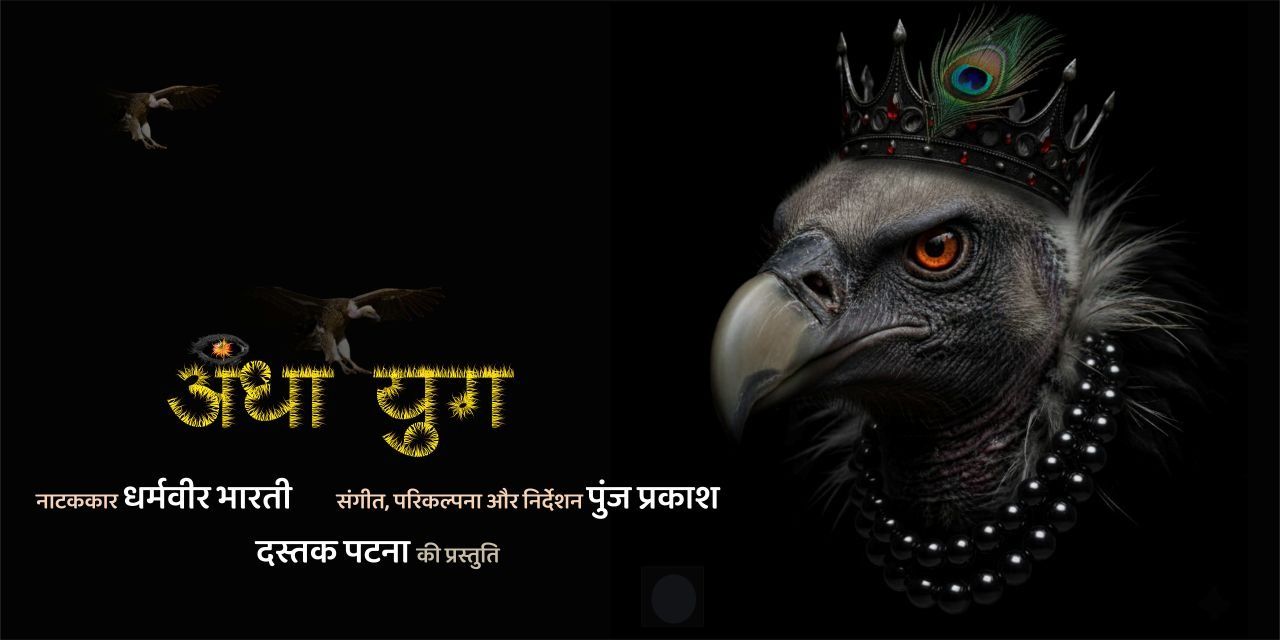

Andha Yug, written by Dharamveer Bharti and staged by Dastak, a renowned theatre group from Patna, Bihar, under the direction of Punj Prakash, is an important and much-celebrated poetic drama in modern Hindi drama literature. Published in 1954, the play is considered a milestone in the Indian theatre world. Its premise is the Mahabharata war, but it is not merely a mythological tale, but a philosophical narrative of humanity`s moral, spiritual, and cultural failings. The play explores the darkness of a civilization that loses its humanity in the frenzy of power, victory, and revenge.
The play is set on the final day of the Mahabharata war—a time when the war is over, the Kaurava side is defeated, and the characters, including Dhritarashtra, Gandhari, and Yudhishthira, are grappling with the moral responsibilities and mental anguish of the aftermath. The story begins with Ashwatthama`s vengeful act, in which he murders the sleeping warriors and sons of the Panchalas in the Pandava camp at night. This act keeps the fire of violence and revenge alive even after the war ends, and it is from this that the voice of civilization`s decline emerges prominently.
The characters used in the play carry deep symbolic meaning. Dhritarashtra—a symbol of blind power. Gandhari—a symbol of moral anger and unseen suffering. Yudhishthira—a man plagued by guilt even after victory in the war over prudence. Ashwatthama—a blind fire of vengeance that consumes itself. Krishna—the ultimate consciousness of righteousness and compassion, but no one is immune to the consequences of power. Through these characters, Bharati offers insight into the human race`s slide toward violence, lust for power, moral degradation, and self-destruction within modern society.
The core message of "Andha Yug" is: there are no victors in war. Even the victor loses, because war destroys a person`s conscience, sense of values, and compassion. The play suggests that the true destruction of civilization occurs not on the battlefield, but within the individual. Where man becomes insensitive, there begins the age of darkness.
Bharti`s language is poetic, profound, and symbolic. The dialogues possess a philosophical depth that compels both reader and viewer to introspect. The play`s theatrical format is also extremely impressive—the effects of song, recitation, silence, and light deepen its visual world.
Andha Yug is not merely a play about a historical or mythological event, but a mirror of the darkness within man, present in every era. This play warns that if society abandons reason, compassion, and justice, civilization will become the cause of its own destruction. Through this work, Dharamveer Bharti has raised profound questions about modern humanity. It is as relevant today as it was at the time of its writing.