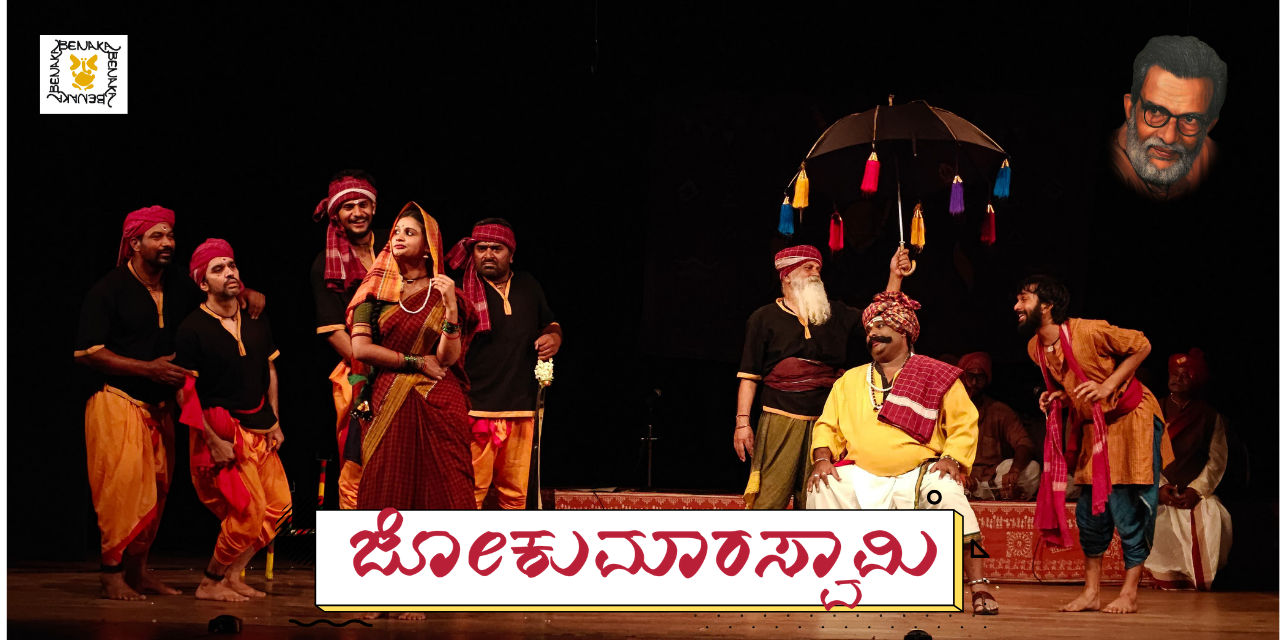


About The Event
Dr. Chandrashekhar Kambar's Jokumaraswamy succeeds in identifying various manifestations of patriarchy and its impact on the lives of women. In this play, Kambar, an outstanding playwright, makes his women characters expose and oppose patriarchal oppression. Gowda is presented as a product of patriarchal society, one that sustains a conceptual framework maintaining structures of domination. He regards women and nature as irrational beings meant to be dominated and exploited for the needs of man, a society that sustains false notions about men and keeps them blind to their true selves.
Through the wisdom of ages, Shari and Ningi in Jokumaraswamy expose the weakness and hypocrisy of Gowda, standing as testimony to the fact that women are wiser than men. They scrutinise the patriarchal systems of domination that oppress women, revealing the false ideologies underpinning them. These women also hold a strong concern for nature, asserting its intrinsic value and inherent worth. By depicting the representation of patriarchy within religious practices and the fashioning of gods, Kambar points to its pitfalls and calls for a new understanding of faith, one that acknowledges the contribution of women. In exposing the false centrality of man, Kambar dismantles the illusion of male superiority, revealing the shortcomings of these conceptual structures and placing women at the centre of the discussion.
Ultimately, the play fulfils the purpose of a feminist critique, calling for a revolution in the social, sexual, and economic structures that exploit women.


