
Search for Movies, Events, Plays, Sports and Activities
Mumbai
media-desktop-katthale-daari-doora-0-2026-5-30-t-7-27-24.jpg

About The Event

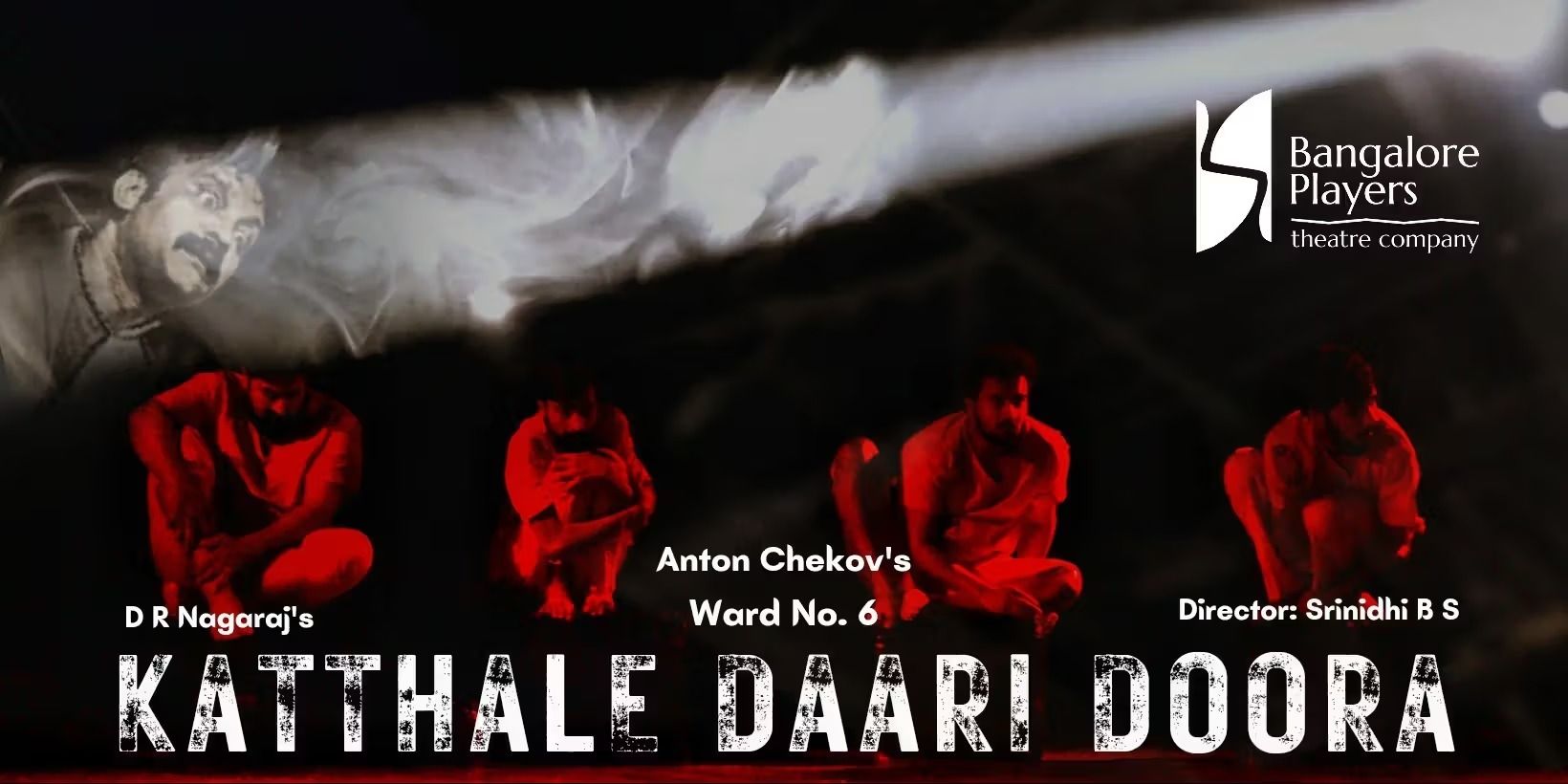
Kattale Daari Doora -- A play, written by D. R. Nagaraj, in the early 80`s, was actually inspired from Anton Chekhov`s short story Ward No. 6. The stage adaptation of this play has a historical importance in Kannada`s cultural context.


The play is a story of the lives of inmates in a mental asylum. The story is hard-hitting and revolves around the injustice, exploitation, corruption and violence which are deep rooted and have developed dynamics to establish various powers.


As said by Chekhov, "the role of the Artist is to ask questions, not answer them", this play by Nagaraj asks pertinent questions. Is suffering simply a creation of the mind? Or does the physical material world around us in our personal circumstances play a role in suffering? Must one have experienced suffering first hand in order to help those around us who suffer? What is the meaning of `freedom` when we are enslaved by sociopolitical illnesses? 


`Kattale Daari Doora` drives readers-audience to these complex questions through its narratives. D. R. Nagaraj, one of India`s finest cultural critics, had brought in Marxist ideology into the play when he wrote it in Kannada.


The play consolidated many different issues of society at large with powerful dialogues. The key characters are symbolic representation of dissidence, who believe in fighting against the social & cultural evils to change the existing system. And, thus achieving the real `freedom`.


The sociopolitical consciousness of the play is a justifiable & passionate attempt in exploring the struggle to achieve freedom from inequalities and injustices. Emphasis given on the confluence of different perspectives and ideas in the play is a trademark of great literature. 


The primary function of Art & Literature is to cast a spotlight on our innermost selves. Human beings capacity for good and propensity for evil is discussed brilliantly in the play. If it`s to capture the madness, bewilderment and vulnerability of our times; the absurdity of `freedom` we have, then perhaps there`s no better play at this juncture of history than `Kattale Daari Doora` in Kannada. It has exposed the seminal developments of `fighting spirit` of humans for `freedom` in the form metaphorical undertones.  


It has stood the test of time, and it`ll continue to do so. We believe that the play would be an effective way to raise more questions which are important even today.