

About The Event
PLAY SYNOPSIS:
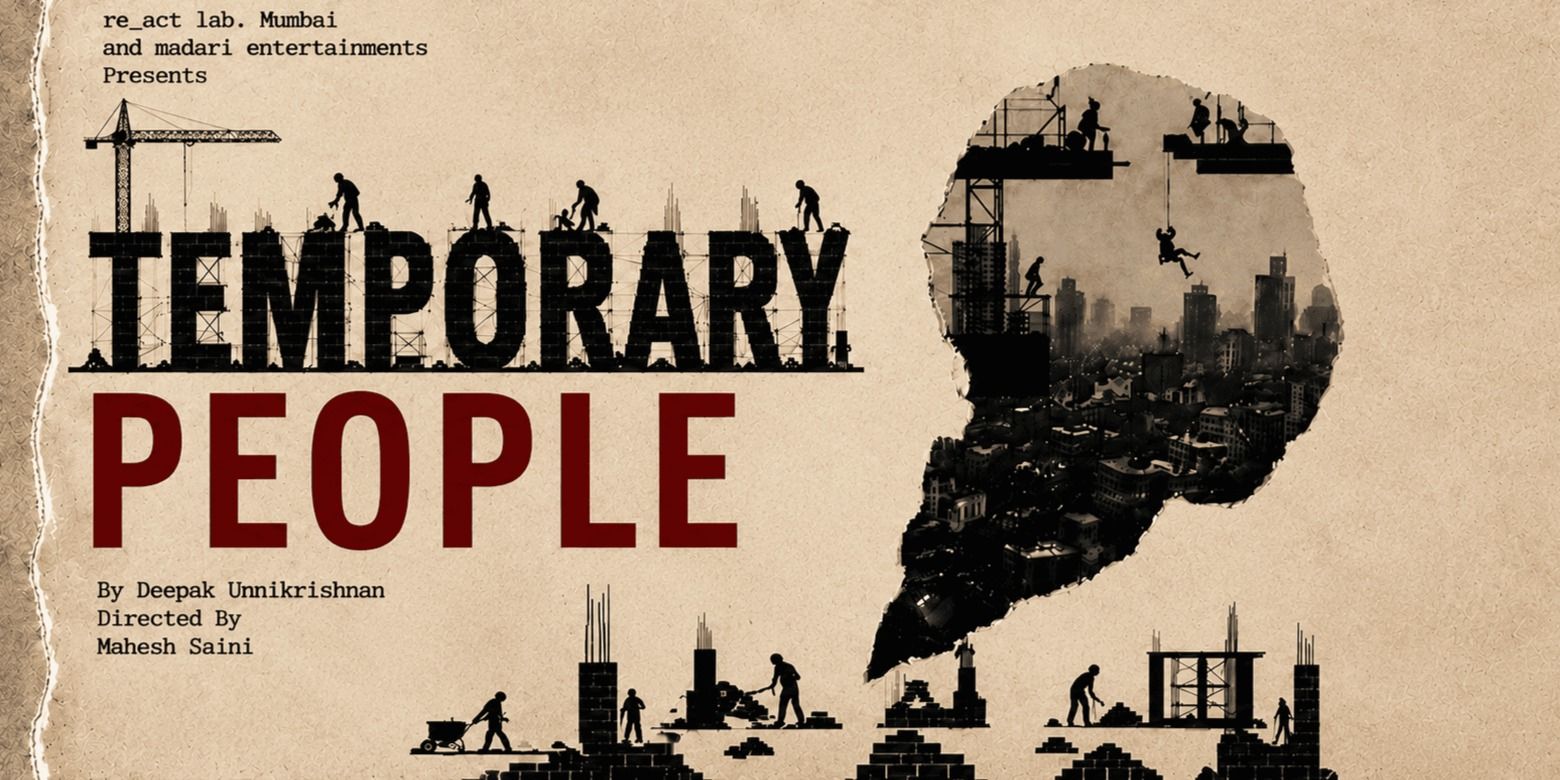
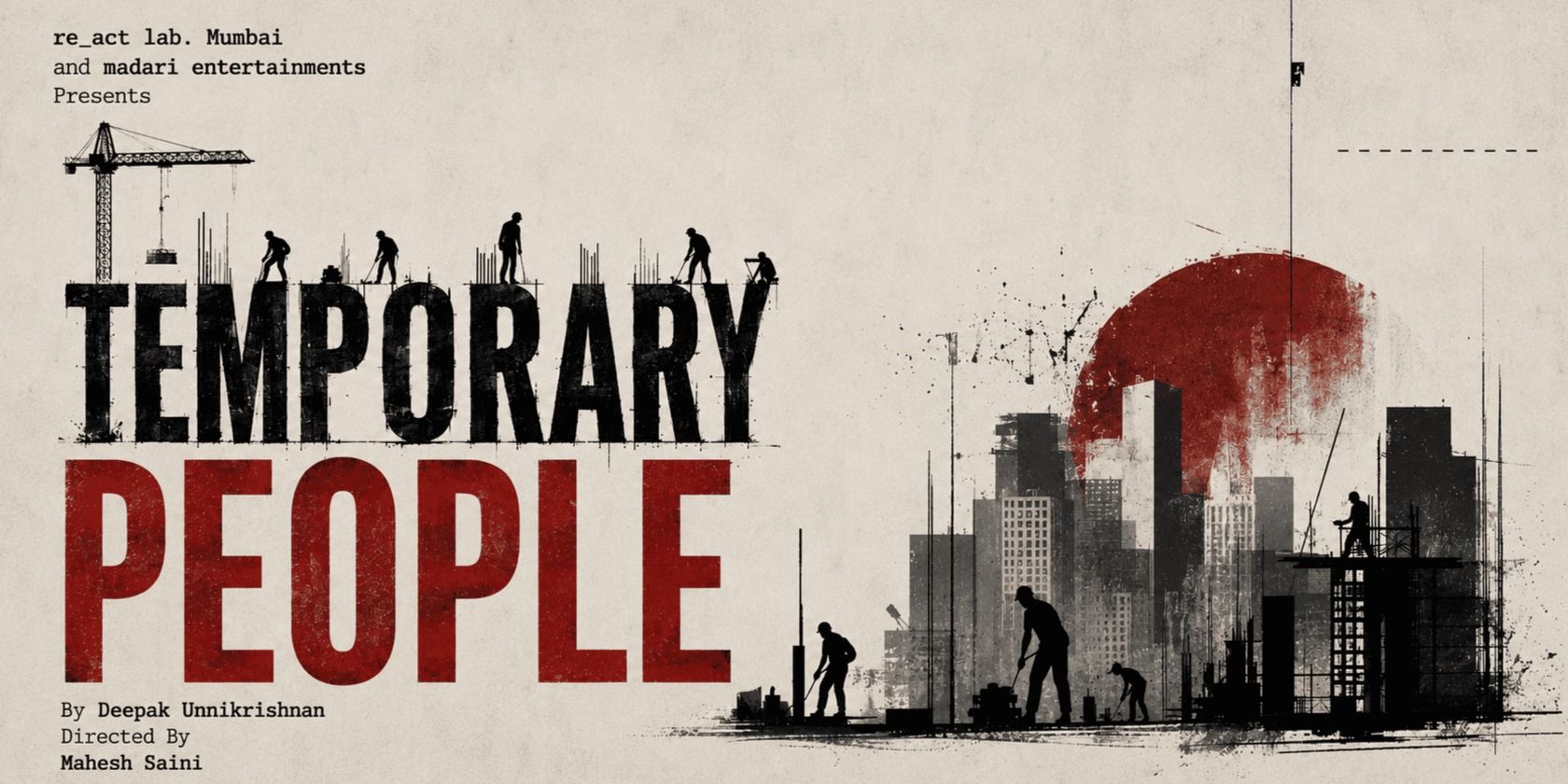
Play is inspired from stories Gulf Return, Birds, Fone and Taxi Driver from the book
TEMPORARY PEOPLE by Deepak Unnikrishnan & Poems written by Sabir Haka.
Somewhere in the Gulf, 1980.
In the booming Gulf, thousands of workers leave their homes in India chasing the promise of
prosperity. Instead, they find themselves trapped in a world of endless construction sites,
crowded labour camps, and uncertain futures.
Temporary People is a 75-minute devised play. It follows ANNA VARGHESE, an unqualified
nurse with a "superb track record", whose only job is to patch up construction workers when
they fall.
The play centers on one night when a young migrant worker Iqbal, falls. As Anna desperately
tries to keep him alive. Amid exploitation, loneliness, and longing, the migrants forge
friendships, share stories, and search for dignity in an unforgiving landscape. The concept
reveals a community struggling to hold on to its identity in a place that sees it as temporary.
Every city tells a story of ambition. But beneath every skyline lies another story of the people whose labour made it possible.
TEMPORARY PEOPLE began with a simple curiosity, how do we make visible those who are expected to remain unseen? While reading Temporary People by Deepak Unnikrishnan, I was struck not only by its portrayal of migrant workers, but by the extraordinary theatricality of its world. The stories move effortlessly between realism and the surreal, tenderness and brutality, reminding us that migration is not merely an economic condition but an emotional one.
Rather than adapting the text, I wanted to respond to it. What make a person leave his home and roots? Why even under the fatal circumstances a person choose to continue? Do the migrant labourers really have any choices? Our rehearsal process became an act of collective investigation where actors improvised, questioned, discarded and rediscovered material until the performance found its own language. The work that has emerged belongs as much to the ensemble as it does to me.
This production is not about offering answers or asking for sympathy. It is an invitation to witness lives that are routinely overlooked and to recognise the invisible human cost hidden beneath every narrative of growth and development. If the audience leaves looking at their own cities differently, the performance has done its work.


